Source Lifelike Artificial Flowers for Home Wedding Restaurant
Compare 30 listings of lifelike artificial flowers suitable for home decoration, weddings, and commercial spaces. Buyers can review features like color, material, and customization options from suppliers in China with varying MOQs and lead times.
Key considerations
Products List


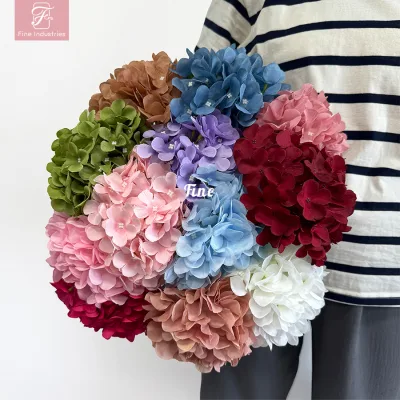


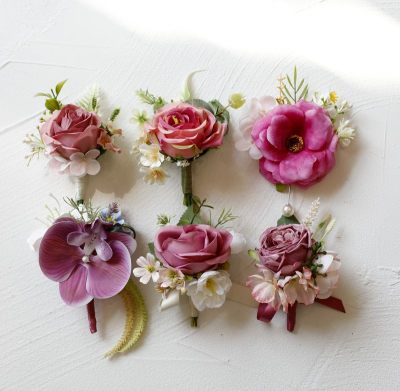


Comprehensive Sourcing Guide
Strategic Sourcing Guide for Lifelike Artificial Flowers
Understanding Product Variability and Technical Specifications
When sourcing lifelike artificial flowers, buyers must first recognize that the market is not monolithic; it consists of distinct product categories with varying technical specifications. The core keyword "lifelike artificial flowers" encompasses a wide range of items, from small decorative bonsai arrangements to large-scale landscaping solutions. A critical observation in the current market is the divergence in product models and dimensions. For instance, some suppliers offer specific models like the "I9" or generic "Artificial Flower" designations, while others focus on specialized types such as "Artificial Wisteria Flower" or "wall grass."
Dimensional consistency is a primary technical consideration. Specifications vary significantly depending on the intended use. Standardized lengths observed in the market include approximately 35cm, 38cm, and up to 110cm for larger floral arrangements. The 110cm variant is often associated with vertical displays or wall decorations, whereas the 35cm to 38cm range is typical for tabletop or home decor applications. Buyers must verify the exact standard length for their specific procurement needs, as a mismatch can lead to aesthetic failures in the final installation. Furthermore, the physical footprint of the product is crucial for logistics. One observed configuration indicates a carton size of 0.76m by 0.76m by 0.38m, with a specific cubic meter (Cbm) calculation of 0.219 per piece. This data point is essential for freight cost estimation and warehouse planning.
The material composition is another defining technical attribute. While some products are described simply as "Artificial," the underlying material is often specified as Plastic, PP (Polypropylene), or PE (Polyethylene). These materials are selected for their durability and ability to mimic natural textures. The "wall grass" category, for example, explicitly lists PP and PE as materials, suggesting a different manufacturing process compared to the "Handmade" floral arrangements often found in the home decor sector. The "Handmade" process is a significant differentiator, implying a higher level of craftsmanship and potentially a more realistic appearance, which aligns with the "lifelike" requirement. However, buyers should verify if the "Handmade" claim applies to the entire assembly or just specific components like the petals.
Compliance, Certification, and Material Safety Standards
In the realm of artificial flora, compliance and certification are often less about formal safety testing and more about material safety and environmental claims. Buyers must approach supplier assertions regarding "Environmentally Friendly" features with a critical eye. While some product listings highlight features such as "Natural" and "Environmentally Friendly," these are marketing attributes rather than guaranteed certifications. There is no universal standard cited in the general market data that automatically validates these claims without specific documentation from the manufacturer.
When evaluating suppliers, the absence of named certifications or specific standard numbers (beyond generic model names) requires the buyer to request third-party test reports. For products intended for commercial use in hotels, restaurants, or supermarkets, the materials used must meet local fire safety regulations. The "Plastic," "PP," and "PE" materials mentioned in the supply chain data are generally non-toxic, but their flammability ratings vary. Buyers should explicitly ask for fire resistance test results, especially for large installations like wall grass or ceiling decorations where fire codes are stringent.
Furthermore, the claim of "Evergreen" features suggests a product that retains its color and shape over time. While one listing mentions a "Lifetime" of 3-5 years, this is an observation of a specific product's durability, not a universal guarantee for all lifelike artificial flowers. Long-term exposure to UV light, which is common in sunlit homes or outdoor landscaping, can cause fading. Buyers should verify the UV resistance of the plastic or PE materials used. If the product is marketed for outdoor use, such as for "Landscaping" or "Recreation," the supplier must provide evidence of UV stabilization in the material formulation. Without this verification, the "lifelike" quality may degrade rapidly, leading to premature replacement costs.
Cost Drivers and Pricing Dynamics
The pricing of lifelike artificial flowers is influenced by a complex interplay of factors, including material costs, labor intensity, and order volume. The observed price range in the market spans from $0.20 to $23.53 USD. This wide variance indicates that the "lifelike" attribute is not a single price point but a spectrum of quality. The lower end of the price range likely corresponds to mass-produced items made from basic plastic with simple molding processes. In contrast, the higher end of the spectrum typically reflects products that utilize "Handmade" processes, more complex designs like "Bonsai" or "Spherical Flower" styles, and higher-quality materials that better mimic natural textures.
Labor is a significant cost driver. Products described as "Handmade" inherently require more human intervention than machine-stamped items. This increases the unit cost but often results in a superior aesthetic that justifies the price for high-end home decor or event planning. The "Customization" factor also plays a pivotal role in pricing. While some listings indicate "Customization: Available," others state "Non-Customized." Custom orders, which may involve specific colors, sizes, or arrangements, invariably carry a premium due to the setup costs and the need for specialized production runs.
Order volume is the third major determinant of cost. The Minimum Order Quantity (MOQ) varies widely, ranging from 5 pieces to 1440 pieces, with specific instances showing MOQs of 100 pieces and 492 pieces. Buyers purchasing small quantities for sample testing or small boutique projects will face a higher per-unit cost. Conversely, bulk buyers who can meet higher MOQ thresholds can negotiate better pricing. The "4PCS Be Packed in a Box" specification suggests that packaging efficiency also impacts the final landed cost. Efficient packing reduces shipping volume, which can lower freight charges, a factor that should be included in the total cost of ownership analysis.
Typical Applications and Usage Scenarios
Lifelike artificial flowers serve a diverse array of applications, ranging from intimate home settings to large-scale commercial environments. The "Suitable for" attributes observed in the market highlight this versatility. Common usage scenarios include "Home" decoration, where the aesthetic appeal of "Bonsai" or "Spherical Flower" styles is paramount. These products are often used as centerpieces or accent pieces in living rooms and dining areas. The "Decoration" function is central to this category, with the goal of enhancing the visual environment without the maintenance requirements of real plants.
Commercial applications are equally significant. The market data indicates suitability for "Wedding," "Restaurant," "Supermarket," and "Hotel" environments. In these settings, the "lifelike" quality is critical because the flowers are often viewed up close by guests or customers. A realistic appearance enhances the ambiance and perceived value of the venue. For example, "Artificial Wisteria Flower" arrangements are frequently used in wedding arches or restaurant entryways to create a romantic or welcoming atmosphere. The "Purple" and "Green" color options allow for customization to match specific event themes or brand colors.
Outdoor and landscaping applications represent another key segment. Products labeled for "Recreation" and "Landscaping," such as "wall grass," are designed for exterior use. These items often feature "Complex" ground cloth designs to ensure stability and realistic appearance in garden settings. The "Function" of "Absorb Radiation" suggests that some products may have specific properties for outdoor environments, potentially offering protection against UV rays or acting as a barrier. However, buyers must verify the specific environmental ratings of these products, as not all artificial flowers are suitable for direct sunlight or harsh weather conditions.
Supplier Evaluation and Verification Protocols
Evaluating suppliers for lifelike artificial flowers requires a rigorous approach to verify the claims made in product listings. The origin of these products is predominantly "Guangzhou, China" and "Guangdong, China," which are major manufacturing hubs. While this indicates a concentration of supply, it does not guarantee quality. Buyers should conduct due diligence on the specific factory capabilities rather than relying solely on the regional reputation.
Key verification steps include confirming the "Handmade" process claims. Buyers should request video evidence or detailed process descriptions to ensure that the labor-intensive aspects of production are genuine. Additionally, the "Customization" availability must be validated. Some listings show "Customization: Available" while others state "Non-Customized." Buyers must clarify whether the supplier can accommodate specific requests for color, size, or arrangement style before placing an order.
Payment terms are another area requiring careful review. The market shows a mix of payment methods, including "T/T," "Western Union," "Moneygram," and "Paypal." While "T/T" (Telegraphic Transfer) is standard for B2B transactions, the inclusion of other methods suggests flexibility for smaller orders or specific buyer preferences. Buyers should ensure that the payment terms align with their risk management policies and that the supplier is willing to provide a formal contract.
Lead times are also a critical factor in supplier evaluation. Observed lead times range from 7-15 days to 10-15 days. These timelines can vary based on order volume and customization requirements. Buyers should confirm the lead time in writing and understand the implications of delays. For time-sensitive projects like weddings or seasonal events, a buffer should be built into the procurement schedule to account for potential production bottlenecks.
Quality Control and Long-Term Procurement Considerations
Quality control for lifelike artificial flowers extends beyond the initial inspection of the product. It involves assessing the durability of the materials and the consistency of the manufacturing process. The "Lifetime" of 3-5 years mentioned in some listings provides a benchmark, but buyers should verify this against their specific usage conditions. For high-traffic areas like hotels or supermarkets, the wear and tear on the flowers will be more significant, potentially shortening the effective lifespan.
Packaging is a vital component of quality control. The "prod_packing" specifications vary, with options ranging from "4PCS Be Packed in a Box" to "in Roll" or "by Carton." Proper packaging is essential to prevent damage during transit, especially for delicate items like "Spherical Flower" or "Bonsai" arrangements. Buyers should inspect the packaging materials to ensure they provide adequate protection against crushing and moisture. The "Carton Size" of 0.76m x 0.76m x 0.38m is a specific dimension that should be used to calculate shipping costs and storage requirements accurately.
Long-term procurement considerations include the availability of replacement parts or reordering capabilities. If a specific "Artificial Flower" model is discontinued, the buyer may need to find a substitute that matches the original aesthetic. Therefore, maintaining a relationship with a supplier who offers consistent quality and has a stable product line is beneficial. Additionally, buyers should consider the environmental impact of their procurement. While some products claim to be "Environmentally Friendly," the end-of-life disposal of plastic-based artificial flowers remains a concern. Buyers may wish to explore suppliers who offer recycling programs or use more sustainable materials in their production processes.
Comparative Analysis of Product Attributes
To facilitate decision-making, buyers can compare key attributes across different product categories. The following table summarizes the observed variations in specifications, materials, and usage scenarios.
| Attribute Category | Product Type A (Home Decor) | Product Type B (Commercial/Wall) | Product Type C (Landscaping) |
|---|---|---|---|
| Primary Style | Bonsai, Spherical Flower | Floral, Wall Grass | Complex Ground Cloth |
| Material | Plastic (Handmade) | PP, PE | PP, PE |
| Standard Length | ~35cm, 38cm | ~110cm | As Customer Requirements |
| Color Options | Green, Purple | Green, Purple | Green |
| MOQ Range | 100-492 Pieces | 5-1440 Pieces | Variable |
| Lead Time | 7-15 Days | 10-15 Days | Variable |
| Suitable For | Home, Decoration | Hotel, Restaurant, Supermarket | Recreation, Landscaping |
| Lifetime Estimate | 3-5 Years | Not Specified | Not Specified |
This comparison highlights that while all products fall under the "lifelike artificial flowers" umbrella, their technical requirements and applications differ significantly. Buyers must align their procurement strategy with the specific attributes of the product type they intend to purchase. By focusing on these distinct characteristics, buyers can ensure they select the right product for their specific needs, balancing cost, quality, and functionality effectively.
FAQs
What are the typical dimensions for lifelike artificial flowers?
Standard lengths observed in the market include approximately 35cm, 38cm, and up to 110cm for larger floral arrangements. The 110cm variant is often associated with vertical displays or wall decorations, whereas the 35cm to 38cm range is typical for tabletop or home decor applications.
How long do lifelike artificial flowers typically last?
Some listings mention a lifetime of 3 to 5 years for specific products. This durability observation is not a universal guarantee, as long-term exposure to UV light can cause fading, especially for outdoor landscaping applications without UV stabilization.
Which materials are commonly used to make lifelike artificial flowers?
Products are often constructed from Plastic, PP (Polypropylene), or PE (Polyethylene) to mimic natural textures. The wall grass category explicitly lists PP and PE, while other floral arrangements may use different plastic compositions depending on the handmade process.
Can buyers customize the size or color of these flowers?
Customization availability varies by supplier, with some offering available options and others stating non-customized products. Buyers must verify specific requests for color, size, or arrangement style before ordering, as custom orders often carry a premium due to setup costs.
What is the typical lead time for ordering these flowers?
Observed lead times range from 7 to 15 days depending on the supplier and order volume. These timelines can vary based on customization requirements, so buyers should confirm the lead time in writing to account for potential production bottlenecks.
How are lifelike artificial flowers typically packaged for shipping?
Packaging options vary from 4 pieces packed in a box to items shipped in rolls or cartons. Efficient packing reduces shipping volume, which can lower freight charges, and proper packaging is essential to prevent damage during transit for delicate items.
Where are these artificial flowers primarily manufactured?
The origin of these products is predominantly Guangzhou, China, and Guangdong, China. While this indicates a concentration of supply, buyers should conduct due diligence on specific factory capabilities rather than relying solely on the regional reputation for quality.